
Redefining Power as Mongolia Embraces Coalition Politics

Mongolia’s Democratic Party (DP) just celebrated its 35th anniversary, with First Deputy Prime Minister Luvsannyamyn Gantumur hailing its legacy in shaping the nation’s democratic path. But behind the fanfare lies a political landscape in flux—where old rules no longer apply and coalition-building has become the new currency of power.
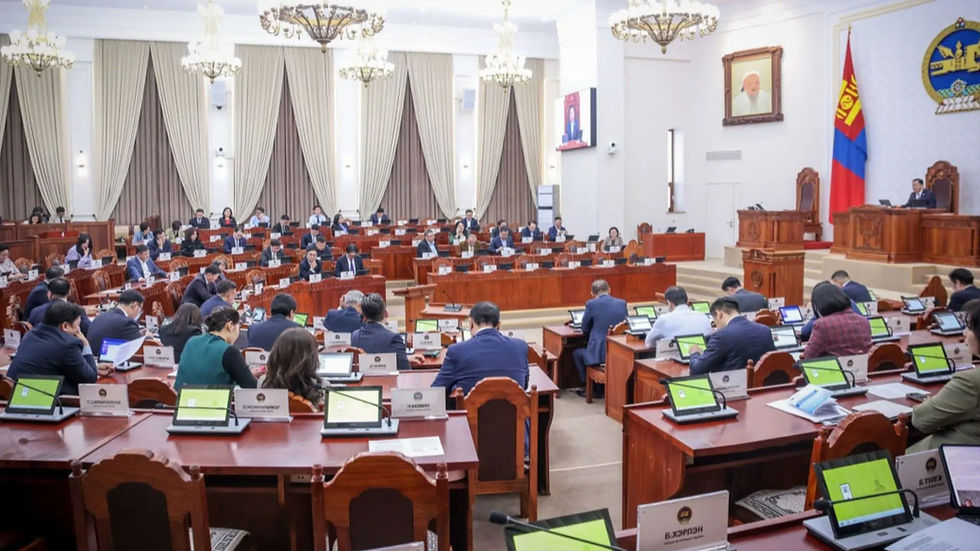
The 2024 parliamentary elections introduced a mixed-member proportional representation system that has upended Mongolia’s electoral dynamics. Coalition governments are no longer rare exceptions—they’re the new norm in coming years.

This seismic shift raises urgent questions: Does proportionality strengthen democratic legitimacy, or does it risk fracturing political coherence and weakening accountability?
At the core of this transition lies a decisive break with majoritarian dominance. Under the new system, no single party is likely to command an outright majority in the future. Political survival now hinges on coalition-building, compromise, and continuity across party lines. Governance is less about winning elections outright and more about negotiating durable alliances—an unfamiliar skill set for many Mongolian politicians.
In this emerging context, the DP’s trajectory under Gantumur is especially instructive. After navigating factional infighting and consolidating party leadership, Gantumur has positioned the DP as a central player in the governing coalition. His policy priorities—ranging from ambitious income growth targets to expansive infrastructure development by 2028—suggest a bid to anchor the DP as a pragmatic, results-oriented coalition partner. The emphasis is on competence, cohesion, and relevance in a system that rewards flexibility over ideological purity.
Yet this optimism is tempered by more circumspect voices within the party. Odbayar, the DP’s cabinet minister, has offered a candid assessment of the emerging coalition paradigm. While acknowledging short-term gains—such as breaking legislative deadlock and enabling large-scale initiatives—he warns of deeper institutional vulnerabilities. Chief among them is the erosion of clear party identities and the weakening of the opposition’s oversight role. As the DP integrates into government alongside the dominant Mongolian People’s Party (MPP), its capacity to serve as a meaningful counterweight risks being compromised.
Odbayar’s critique reflects broader concerns. Coalition governments may foster inclusivity, but they also risk generating policy inertia, intra-coalition fragmentation, and what might be termed “coalition fatigue.” Frequent negotiation may yield consensus, but often of the lowest-common-denominator variety. Moreover, a proliferation of smaller parties under proportional representation could make coalition formation increasingly complex—destabilising governance and blurring lines of accountability.
The road to 2027 and 2028 will demand a new political dexterity. In Mongolia’s coalition era, electoral success alone will not suffice. Strategic positioning, alliance management, and institutional resilience will become the critical currencies of power. The long-term test lies not in adapting to coalitions temporarily, but in embedding mechanisms that preserve democratic accountability within them.
Mongolia’s embrace of proportional representation is a defining political inflection point. It promises more pluralistic governance, but also poses risks of instability and institutional drift. Whether this new system consolidates democracy or fragments it will depend on how deftly its architects—and its inheritors—navigate the complex arithmetic of coalition politics.


Comments