
Mongolia Revisits Freedoms as Public Trust Frays

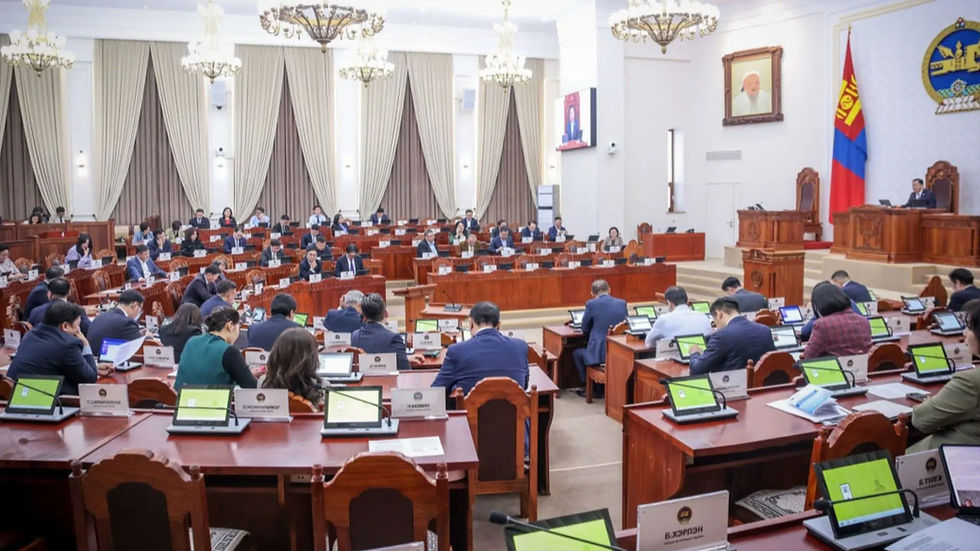
Mongolia, one of Asia’s few democracies, is reassessing key political rights as public trust in institutions wanes. Parliament is debating amendments to laws on demonstrations and media freedoms, exposing a fundamental tension: how to protect basic liberties while addressing fears of manipulation and disorder.

Some proposed changes suggest progress. The draft law on demonstrations would eliminate the requirement for protest organizers to obtain permits from provincial or city governors, replacing it with a simple notification to police 48 hours in advance. Media reforms would extend source protection to all journalists, correcting a longstanding anomaly that limited such rights to those working for the public broadcaster, MNB.
Yet concerns persist. Mongolia’s ranking in the World Press Freedom Index, published by Reporters Without Borders, has fallen sharply—from 54th in 2015 to 90th in 2024.
Critics warn that while overt obstacles are being removed, new forms of control may emerge. The demonstration bill would empower administrative officials, acting on police recommendations, to disperse protests deemed a threat to public order without requiring court approval. Expanded “no-go” zones around sensitive locations risk pushing protests away from visible spaces like Sukhbaatar Square. Meanwhile, Criminal Code provisions against “blatantly false information” could be used selectively against journalists or activists, and the growing reliance of media outlets on government-linked funding channels raises questions about editorial independence.
Complicating the debate are rising claims that some citizens are abusing these very freedoms. Government and pro-government figures allege that “fake protesters”—so-called “protest billionaires” in Mongolian tugrik terms—are turning demonstrations into paid opportunities, clouding genuine public dissent.
Some officials, including the prime minister, have suggested that the anti-government protests of January 2025 were manipulated by private interests, though concrete evidence has yet to emerge and is inherently difficult to prove.
This places Mongolia’s lawmakers in a delicate position. They must balance the need to prevent abuses without curbing legitimate dissent. Public frustration over perceived double standards—where registered protests are sometimes restricted while unregistered gatherings are tolerated—only deepens skepticism about official intentions.
The durability of Mongolia’s democratic reputation will depend less on the formal letter of these reforms than on their application in practice. Laws intended to manage demonstrations and protect press freedoms must be enforced impartially, or risk entrenching cynicism and distrust. At a time of global economic uncertainty and political volatility, Mongolia’s leaders face a critical test: whether they can safeguard the rights that underpin their democracy without allowing either state repression or private manipulation to undermine them.
The coming months and years will show whether Mongolia’s evolving rules strengthen the resilience of its political system—or whether recalibration inadvertently chips away at the freedoms it seeks to protect.


Comments