
Mongolian Prime Minister Faces Dismissal Amid Coal-Driven Power Struggle

Mongolia’s latest political storm reveals how the country’s richest coal deposits continue to shape its politics. On October 7, over 50 lawmakers from across the spectrum—ruling Mongolian People’s Party (MPP), opposition Democratic Party (DP), and junior coalition partner HUN—submitted a motion to dismiss Prime Minister Gombojavyn Zandanshatar.

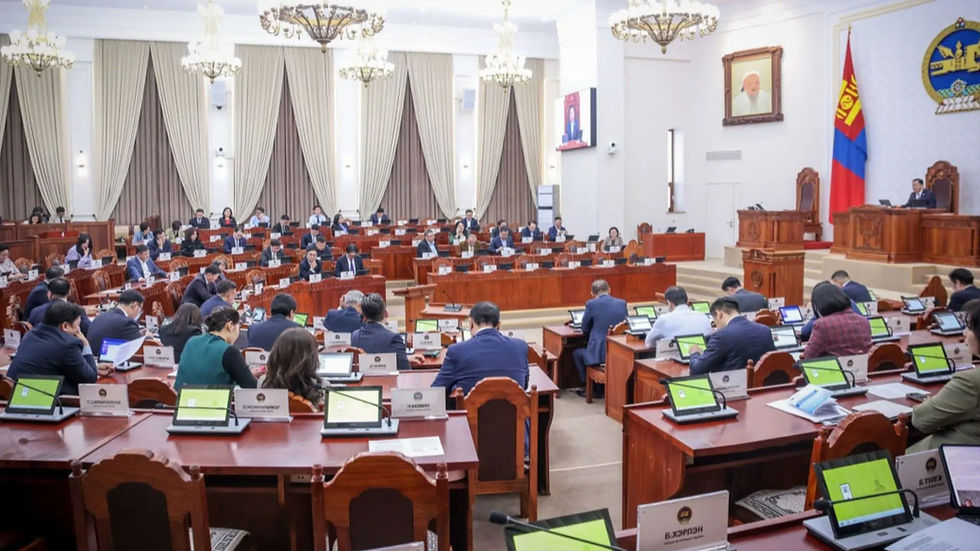
Parliament began debate on October 10, with a decisive vote expected in the week of October 13.
What began as a leadership contest within the ruling MPP has evolved into a political crisis and a contest for control over Tavan Tolgoi, the country’s vast coking coal field whose revenues underpin much of Mongolia’s economy.
The Prime Minister’s opponents accuse him of exceeding his constitutional authority in replacing the justice minister, using selective anti-corruption probes targeting the Speaker, and arbitrarily revising the methodology for calculating mineral royalties to lower rates. His allies countered with their own petition to unseat Speaker Amarbayasgalan, claiming support from 67 members, including 34 MPP and 31 DP lawmakers.
Furthermore, the Prime Minister triggered the turmoil by declassifying contracts of Erdenes Tavan Tolgoi (ETT), the state-owned mining firm. The move appeared aimed at Bodi International, which had allegedly purchased coal at below-market prices while financing and constructing the Tavan Tolgoi–Gashuun Sukhait railway. The disclosures fueled public outrage over “coal theft” and opaque deals, with blame extending to the previous government under Oyun-Erdene and Amarbayasgalan.
Bodi denied the charges, noting the contracts had been public since 2022 and that its role was limited to construction, not coal trading. The dispute illustrates how infrastructure tied to Tavan Tolgoi can be repurposed as political ammunition.
MCS Group, another dominant conglomerate, swiftly defended its record, highlighting tax payments of 1.3 trillion tugrik (about $382 million) and a workforce of 14,000. Its mining arm, Energy Resources, operates Ukhaa Khudag, one of Tavan Tolgoi’s most lucrative deposits.
Control over such assets allegedly gives private firms powerful leverage against politicians who try to rein them in. Earlier proposals to nationalize Ukhaa Khudag have since faded.
Pro-Speaker lawmakers now cite that reversal as evidence the Prime Minister protects select corporate interests, including those of MCS.
Zandanshatar insists his campaign is patriotic, aimed at reclaiming national wealth. He touts plans to revive the Borteeg deposit—part of the Tavan Tolgoi group of coal fields—as an opportunity to raise public salaries and pensions.
He also claims Speaker Amarbayasgalan announced his bid for the MPP chairmanship just after Borteeg’s inclusion in the government’s development plans, a move he frames as obstruction by private interests. Yet the timing suggests a deeper contest for succession within the ruling party, with coal policy as the weapon of choice.
This political turmoil comes as Mongolia’s economic outlook dims. The Asian Development Bank recently cut its growth forecast for 2025 and 2026 to 5.7 percent, citing falling coal prices, sluggish reforms, and weaker demand from China. The IMF has issued similar warnings. These headwinds threaten to erode fiscal revenues, widen external deficits, and strain the balance of payments. The political infighting only worsens investor unease and delays decisions on next year’s budget.
The main opposition DP and smaller groups such as Nomtoibayar’s National Alliance and HUN now hold decisive votes, giving them rare leverage either to shape a new government or keep Zandanshatar’s in power.
Some see opportunity in this chaos. A serious debate on Tavan Tolgoi’s ownership and governance could finally emerge, ranging from offering some of its shares to the public on the stock exchange to royalty-based models that gradually reduce state equity and limit political interference.
Ex-Prime Minister Oyun-Erdene is meanwhile initiating a parliamentary hearing to question MCS’s ownership of the Ukhaa Khudag mine, while DP members such as Bayarmaa and Ganbat are pushing for another inquiry into the Mongolia–China Energy deal, which covers the Gashuun Sukhait–Ganqimaodu cross-border railway and long-term coal sales to China Energy.
At this fragile moment, the government must shield resource policy from factional politics, or Mongolia’s mineral wealth will continue to fuel instability instead of national prosperity. Once again, the country’s leaders are showing that in Ulaanbaatar, coal remains the currency of power.


Comments