
Mongolia’s Ruling Party Faces Generational Rebellion as Amarbayasgalan Challenges the Old Guard

Amarbayasgalan’s modern agenda collides with entrenched power, exposing the deepest rift in years.
Mongolia’s ruling party is facing a rebellion from within driven less by ideology than by age. At 44, parliamentary speaker Dashzegviin Amarbayasgalan is storming the gates of a system built by his seniors.

His bid for the chairmanship of the Mongolian People’s Party has split the establishment and exposed a deeper struggle over what kind of country a younger Mongolia wants to be.
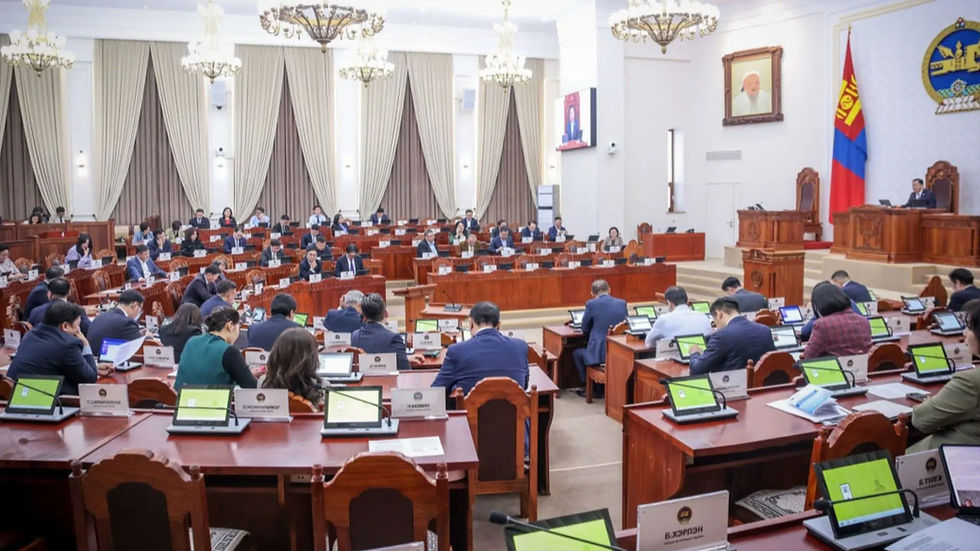
Mongolian Parliament Speaker Amarbayasgalan secured questionable majority backing at the September 28 party congress to become chairman. The result was met not with unity but with resistance.
Prime Minister Zandanshatar, 55, and senior allies dismissed the vote as illegitimate and argued Amarbayasgalan was unfit to lead due to alleged corruption.
The contrast between them is stark.
Zandanshatar, often hesitant in public, faces a rival known for sharp rhetoric and disciplined messaging. By refusing to defer to his elder opponent, Amarbayasgalan is overturning a long-standing culture of seniority in Mongolian politics.
His ascent reflects more than personal ambition. It embodies the entry of a millennial generation into political leadership. 38.5% of Mongolians are between the ages of 18 and 35, and Amarbayasgalan presents himself as their voice. His path from running a publishing house to becoming a campaign strategist for the Mongolian People’s Party and President Khurelsukh mirrors the shift from traditional patronage politics to a professionalized, media-savvy model.
Central to his platform is a call for a “21st-century state.” His flagship “New Cooperatives” program provides low-interest loans for rural herders, aimed at reducing dependence on state subsidies. By retooling support for the countryside, he targets a critical voting bloc while challenging what he brands the “socialist-era mindset.”
His silence on President Khurelsukh, however, signals caution. He confronts Zandanshatar openly but leaves the president outside his line of fire, a tactical bid for broader legitimacy.
The clash is more than personal. It’s the first visible collision between a digitally fluent, reform-minded cohort and the patronage networks that have long defined power. Amarbayasgalan’s rise embodies a shift from backroom consensus to public confrontation—an un-Mongolian style of politics that unnerves the old guard.
The battle has already crippled parliament, stalling the 2026 budget. The opposition Democratic Party has seized the moment, using the MPP’s disarray to attack the government and erode its waning popularity.
Corruption allegations hang over the contest. Amarbayasgalan denies involvement in coal theft or the Admineral scandal linked to Tavan Tolgoi, citing his family’s publishing background and police confirmation he was not tied to a past murder.
He says rivals are using the Anti-Corruption Agency to target him and his allies, a tactic seen in past MPP splits that he aims to end, not repeat.
To his critics, Amarbayasgalan’s reformist image masks the same ruthless maneuvering he condemns. His alleged delaying of a justice minister’s appointment looks like obstruction for political gain.
Yet dismissing him as an opportunist overlooks a longer record. As MPP party general secretary for 8 years, he pushed to expand parliament and restore proportional representation. His cooperative program emphasizes long-term development over short-term giveaways. His methods may be combative, but they align with a coherent push for systemic change.
What began as an internal power struggle has become a test of whether Mongolia’s ruling party can evolve with a younger, more restless electorate. The MPP now faces a defining choice: embrace generational renewal or cling to the hierarchies that risk tearing it apart. The outcome will shape not only its survival but the trajectory of the 2027 and 2028 elections.
Across the aisle, the long-fractured Democratic Party is coalescing around new chairman Odongiin Tsogtgerel, a 48-year-old businessman-politician preaching anti-corruption, leaner government, and fairer sharing of mining wealth. His rise signals a generational realignment in opposition politics and the first credible challenge to MPP dominance in a decade.


Comments