
Mongolia's 2025 Budget Raises Tensions Over Spending Priorities

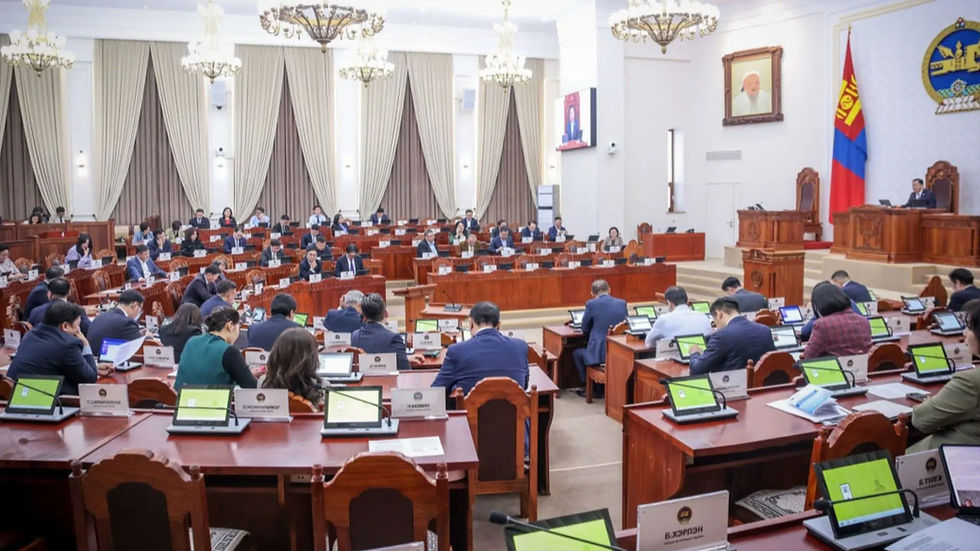
As Mongolia's parliament finalizes the government's 2025 budget, concerns are escalating over wasteful spending, accountability, and the nation's economic future. The proposed budget of ₮35.6 trillion (approximately $10.5 billion) represents a significant ₮3.8 trillion increase from last year's figures, aimed at funding various strategic projects. However, critics argue that increased spending doesn't necessarily guarantee better results, and they worry about the growing burden on taxpayers without clear evidence of economic returns.

The budget allocates nearly 67% of the increase towards recurrent expenses, which has disappointed many who were hoping for an investment-focused approach. Prime Minister Luvsannamsrain Oyun-Erdene defends the budget as a modern shift towards regional development and strategic spending. On the other hand, critics within parliament are calling for cuts, pointing to inflated administrative costs and vaguely defined projects.
These concerns reflect a broader mistrust in the coalition government's resource management and could test its resilience.
The budget’s distribution across ministries is as much a reflection of the coalition’s politics as of the country’s needs. The Ministry of Transport and Development, led by the ruling Mongolian People’s Party (MPP), received the most substantial increase—MNT 1.64 trillion (~$480m), tripling its previous budget to focus on infrastructure. In contrast, the Democratic Party (DP)–led Ministry of Industry and Mining, essential to Mongolia’s economic diversification, receives just MNT 70.9 billion ($20m), casting doubt on the government’s commitment to developing export-led sectors.
Within the coalition, tensions simmer as these budgetary disparities spark calls for greater transparency. A chorus of voices demands a return to fiscal responsibility.
MPs Bayarmaa and Enkhtuvshin decry a 72% rise in office expenses and a 127% jump in travel costs, questioning how such outlays align with Mongolia’s fiscal priorities. Bayarmaa argues that trimming inflated costs could free up at least MNT 1 trillion (~$294m) for healthcare and education, sectors whose funding needs are as urgent as they are under-met.
Businessman-turned-politician Enkhtuvshin has called the budget a “betrayal of public trust” and urges a MNT 5.3 trillion (~$1.56b) reduction, accusing the government of prioritizing local political gains over national interests.
This frustration extended to the “Cultural Voucher Program,” a government initiative granting free access to theater and cinema tickets for youth. While some, like Bayarmaa, dismiss the program as frivolous, Culture Minister Nomin defended it, suggesting that the youth demand and cultural engagement justify the expense. These tensions reveal a deeper divide between popular social spending and needed investments aimed at fostering long-term growth.
Underlying the debate are the complexities of Mongolia’s dependence on coal revenue. Projected sales to China form a key revenue stream, but an impending agreement with China Energy could undermine Mongolia’s pricing power. The deal hinges on completing a railway connecting Gashuunsukhait with China, a long-delayed project that would finally improve Mongolia’s export logistics.
With India also eyeing Mongolian coal via Russia, the stakes in Mongolia’s budget decisions extend beyond its borders, and geopolitical relationships will play a central role in determining economic outcomes.
The government’s defense of its budget centers on the promise of economic growth and development—an investment in a future that looks, on paper, like Mongolia’s ticket to prosperity. But the budget also risks exacerbating coalition divisions, as economic strain and political favoritism surface amid concerns over mounting debt and escalating administrative costs.
If Mongolia is to fulfill its ambitions, it will need more than an expansive budget: it will require clear, accountable spending and a coordinated strategy that aligns political will with sustainable economic policy. The stakes are high, as Mongolia’s economy contends with external pressures, regional partnerships, and the perennial challenge of translating resource wealth into lasting prosperity.


Comments